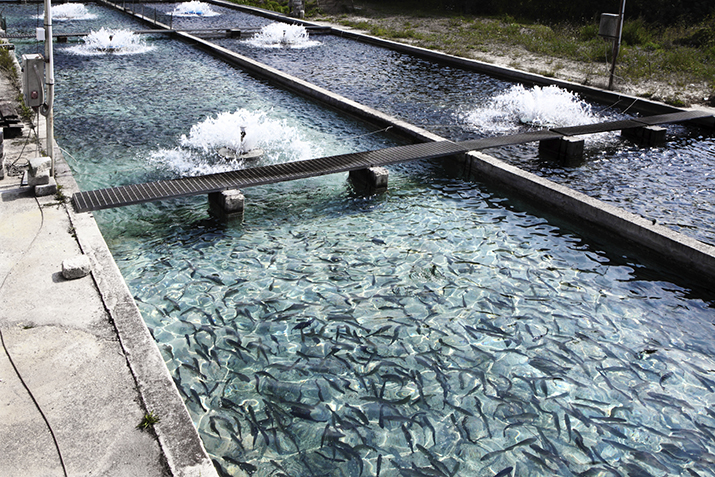
We're all familiar with large-scale agriculture and its effects on our health, the environment, and the family farmer. Did you know that something similar is happening in our waters? Fish farming, or aquaculture, has been the fastest growing sector of animal food production in the world since 1970. The fish raised—in netted cages in coastal waters—currently provide almost one third of all seafood sold. And with the U.S. government pushing for increased production (in order to erase a seafood trade deficit), estimates are that half the fish consumed worldwide will be farm-raised by the year 2025.
At first glance, fish farming may seem like a good idea, a way to ease the stress on overfished populations and help meet the food demands of the world population. (In the North Atlantic, for example, cod, flounder, haddock, and tuna populations are just one-sixth of what they were a century ago.) But, like large-scale agriculture on land, large-scale aquaculture also brings problems, like environmental damage and antibiotic use.
There are, of course, conscientious fish farmers who develop systems to raise fish in ways that don't threaten health or the environment. In fact, you can grow your own fish in your own small fish farm right in your own backyard. The damage caused by farmed fishing depends in large part on the type of fish, how it's raised and fed, the size of the production, and where the farm is located.
Concerns About Aquaculture
Here are the main concerns about aquaculture:
- Creating fish feed for farmed fish depletes other fish species and upsets the balance of the ecosystem. It takes two to five pounds of wild small fish to produce one pound of farmed salmon, for example.
- Farmed fish may contain high levels of contaminants like PCBs, and polybrominated diphenyl ether (PBDE). According to research published by the Environmental Working Group, PCBs found in farmed salmon (at levels 16 times higher than in wild salmon) in U.S. grocery stores are in levels high enough to pose an increased risk for cancer.
- Fish farms can damage neighboring ecosystems, too, like marshes and forests at the water's edge.
- Antibiotics and other drugs used in fish farming sift to the sea floor and seep into open waters. As with antibiotic use in feedlots, there's serious concern that overuse can create drug-resistant strains of disease that can wipe out wild populations. A dye called canthaxanthin is also used to color farm salmon, which would otherwise be grey. (Salmon in the wild absorb carotenoids from eating pink krill; this contributes to their naturally pink color.) This dye has been shown to adversely affect sight when consumed in large quantities.
- Sea lice, which thrive in fish farms, threaten large numbers of wild fish that migrate past the area. (Fish farmers respond to sea lice by adding a pesticide to the fish feed.)
- Waste from fish farms pollutes. Experts estimate that salmon waste off the coast of British Columbia, for example, releases as much nitrogen as sewage from a city with a population of 250,000. And as fish waste and uneaten feed covers the floor of fish farms, it breeds bacteria that's detrimental to bottom-dwelling sea creatures.
- Fish farms threaten other fish and wildlife. Sea birds can become ensnared in netting and sea lions that try to eat farmed fish are sometimes shot. Farm fish that escape compete with wild fish for food and habitat, and they spread disease.
- Farmed fish are generally less nutritious than wild fish. While fish is good for you—low in saturated fat and high in protein, amino acids, and omega fatty acids—there is a substantial difference between farmed fish and wild fish. According to FDA studies, farmed fish are fattier (cultivated catfish have nearly five times as much fat as wild, for example). Wild salmon were found to have a 20 percent higher protein content and a 20 percent lower fat content than farm-raised salmon. And farm-raised fish contain twice as much omega 6 fats (pro-inflammatory) than their wild counterparts.
- As with small family farmers, many small-scale fishermen have lost their livelihood to aquaculture production.
Some fish farmers are addressing these problems. For example, there are salmon farmers who are raising their fish in closed, floating pens so they can filter the wastes and antibiotics from the water. Some are working to improve the management of farms to reduce dependence on antibiotics and to develop plant-based food for farm fish in order to protect small, nonfood fish. Others are working to provide organically raised fish in clean, healthy water without the use of chemicals and antibiotics.
Back to top
Concerns About Wild Fish
And there are disadvantages to wild fish, too:
- Often imported from distances and more expensive to harvest, wild fish usually cost more than farmed fish.
- Because of environmental and natural factors, the availability of wild fish is inconsistent.
- The numbers of wild fish are dwindling. According to marine biologists, if current fishing practices continue, the major fish populations will be extinct by mid-century.
- Many conventional fishers use trawls or "rock-hopper" nets that drags across the ocean floor, damaging habitats and reefs.
- By-catch (the fish and other sea life that's unintentionally caught in nets) accounts for about 25 percent of a fisher's typical catch. These casualties also negatively impact fish populations.
- Many of the older, larger ocean fish are highest in toxins like mercury.
Back to top
Which to Purchase?
So the decision to purchase wild over farm-fished or farm-fished over wild isn't easily made. What may matter most is how sustainably the fish you're eyeing for dinner was raised and/or caught. Of course, this can take some detective work. Your food co-op is probably your best source of information about the fish you can buy. Some things to consider and steps to take to eat fish responsibly:
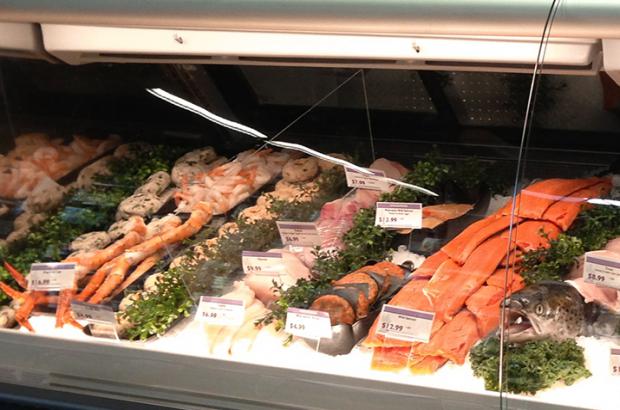
- Read signs and labels at the fish counter. Ask the co-op staff about the source of the fish and what assurances they can offer.
- Visit Blue Ocean Institute for their Guide to Ocean Friendly Seafood. And, look for the Marine Stewardship Council's "Fish Forever" label, which assures that the fish is from a fishery that uses sustainable practices.
- Support organic aquaculture and sustainable fishing practices with your purchases.
- When purchasing wild seafood, choose products that have been caught using sustainable methods like hook and line fishing, trap fishing, and longlining rather than trawling.
- To reduce your consumption of toxins in fish, avoid the longest-living, largest, carnivorous fish in the ocean, like salmon, tuna, swordfish, and shark. Alternatives with similar health benefits include trout, sardines, mackerel, and herring.
Back to top